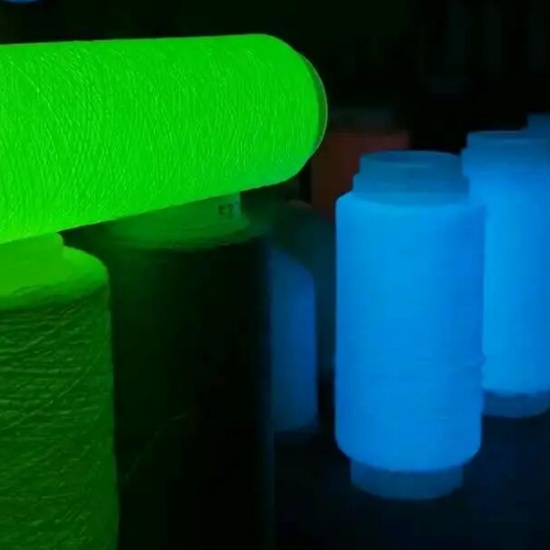
Polyester Glowing Yarn Luminous Yarn For Knitting

Luminous yarn

is a new type of functional yarn that can store light energy in fibers as long as it absorbs visible light for 30 minutes.


It can continuously emit light for 4-5 hours in the dark and can be reused infinitely. Luminous yarn can emit various colored lights, such as blue light, green light, colorful, long-lasting, high brightness, and is non-toxic and harmless to the human body. It is an environmentally friendly and efficient high-tech product.


FEATURES

1.Absorb visible light for 30 minutes and emit light in the dark for 4-5 hours.

2.Natural luminescence with absolute safety.

3.Non toxic and harmless, it will not cause harm to the skin or human body.

4.Permanent luminescence, evenly distributed within the fibers, without any reduction in effectiveness due to washing.


APPLICATIONS

Embroidery thread, curtains, shoelaces

Clothing fabrics (sportswear, jeans)

Work clothes (life jackets, transportation work clothes)

Children's clothing accessories (shoes, hats, advertising shirts, luminous logos, luminous zip ties)


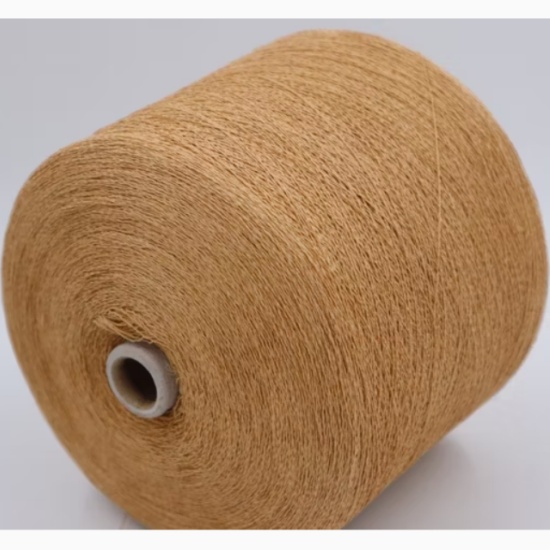
Recyclable Paper Yarn For Weaving Or Knitting

Paper yarn

is a yarn formed from paper strips by employing twisting process. Due to its inherent outstanding features such as antibiotic, deodorant, moisture holding, and absorbency-quick drying properties, paper yarn has lately been highlighted as a new textile material.


The first recorded usage of paper yarn was in 1638, when it was used to make shifu, a form of woven textile. Clothing woven with washi yarns is known as shifu. Wa means Japanese, and shi means paper. In Japan, paper yarns have a long history. Their aristocratic quality is often compared to silk, and they have similar attributes to silk: cooling in the summer and warming in the winter.


Paper yarn falls under the category of natural, eco-friendly fibers; it is safe and hygienic; It is rapidly compostable and biodegradable, taking as little as two weeks to decompose, and produces no toxic byproducts during the process, making it highly sustainable.


Selecting high-quality virgin wood pulp and bamboo pulp as our core raw materials; some of premium products even incorporate tropical abaca (banana fiber) fibers. Avoiding the use of harmful chemical additives to preserve the natural texture and resilience of the plant materials to the greatest extent possible.


Paper yarn is a lightweight and soft material with an exceptionally light texture and a soft, comfortable feel weighing only one-third as much as cotton. Its uniqueness lies in the fusion of paper’s purity and the luster of silk threads, creating an elegant and refreshing aesthetic; it is particularly suitable for spring and summer apparel.


Paper yarn is highly malleable and can be twisted and woven as needed.Paper yarn fabrics feature a clear, natural texture that exudes a unique tactile quality and artistic appeal.It is strong enough to be used in the production of durable products.

Eco-friendly Paper Yarn

Runteks Group Product - Anti-UV Customized Colored Spun Yarn Elevating Sun-Resistant Fabrics to New Standards

Runteks Group Product - Anti-UV Customized Colored Spun Yarn: Elevating Sun-Resistant Fabrics to New Standards


When it comes to creating fabrics that thrive under harsh sunlight, balancing durability, aesthetics, and skin protection is key.  That’s where anti-UV custom colored spun yarn shines—a versatile solution designed to help textiles stand up to intense UV exposure while maintaining their strength, vibrancy, and comfort.

Whether for outdoor gear, everyday apparel, or decorative textiles, this specialized yarn is engineered to address the challenges of sun, weather, and wear—making it a go-to choice for manufacturers prioritizing both performance and style.


What Makes Anti-UV Custom Colored Spun Yarn Stand Out?


This innovative spun yarn boasts a range of features that set it apart, ensuring it meets the demands of diverse applications:
Exceptional Dyeability & Uniform Finish: Achieves rich, consistent coloration across batches, with a smooth, even appearance that enhances the visual appeal of any fabric.

Advanced UV Stabilization: Infused with technology that locks in color, preventing premature fading even after prolonged exposure to sunlight.  This means fabrics stay vibrant longer, reducing the need for frequent replacements.


Reliable Fastness: Resists color migration when blended with other yarns, ensuring color integrity in mixed-fiber fabrics.  It also holds up well against washing and wear, maintaining its look over time.
Weather & Wear Resistance: Built to withstand not just UV rays, but also general degradation from environmental factors like moisture and temperature changes—ideal for outdoor and high-use textiles.

Versatile Count Options: Available in a wide range of counts, making it adaptable to various fabric weights and textures, from lightweight sportswear to heavy-duty outdoor upholstery.


Where Does It Excel?


The practicality of anti-UV custom colored spun yarn makes it indispensable across multiple industries:
Outdoor Textiles: From patio furniture covers to awnings and camping gear, it ensures fabrics stay durable and colorfast under direct sunlight.

Upholstery: Perfect for indoor and outdoor furniture fabrics, where resistance to fading and daily wear is essential.


Sportswear & Activewear: Combines sun protection with breathability and comfort, making it ideal for running, hiking, and other outdoor activities.
Workwear & Uniforms: Keeps fabrics looking professional and functional for workers in outdoor or sun-exposed environments, such as construction, agriculture, or logistics.

Weaved Fabrics: Enhances the performance of woven textiles requiring both structural strength and UV resistance.


In a world where consumers and industries alike demand fabrics that work as hard as they do, anti-UV custom colored spun yarn delivers—blending protection, durability, and style in one powerful solution.  Whether you’re crafting functional workwear or vibrant outdoor gear, this yarn is designed to elevate your products to meet the highest standards of sun resistance and longevity.
Sorona-Like Biobased Source PTT+ PET Component Elastic Yarn

Using biobased source sorona PTT, it endows fibers and fabrics with a soft hand feel, comfortable stretching and recovery, easy dyeing at room temperature and pressure.

This biobased PTT+PET two-component elastic yarn with a uniform spring-like structure, it has the best elasticity and dyeability among non-spandex elastic fibers, with long-lasting elasticity and good recovery.As well as natural stiffness and wrinkle resistance characteristics. It can be widely used in various clothing fabrics.


PTT+PET two component yarn is among the best in the market for two-component composite elastic fibers, belonging to the high-tech new synthetic fiber series. Its working principle is that the thermal shrinkage performance of different components in the fiber is different, and it has a permanent main spiral structure. To put it simply, it is coiled like a telephone wire, has permanent elasticity like a spring, and can be easily processed, providing many advantages for the fabric.


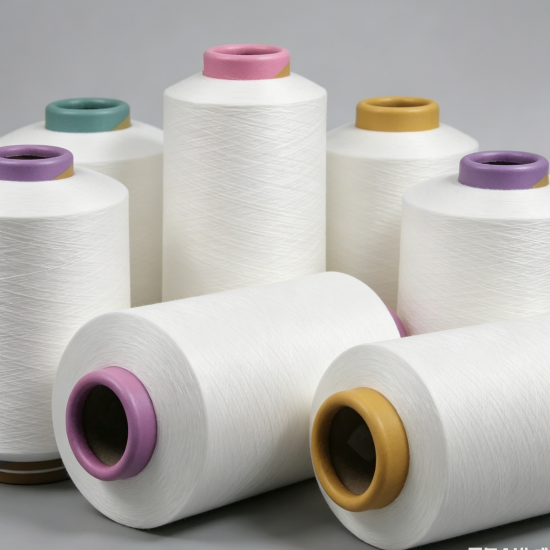
component elastic yarn

Sunscreen And Antioxidant Fiber DTY Filament Yarn

Sunscreen antioxidant fiber

is a multifunctional fiber prepared by blending rare earth antioxidant powder during the spinning process.


The rare earth antioxidant powder used in sunscreen antioxidant fibers is cerium titanium composite powder, with a nanometer size and a large specific surface area. It is evenly dispersed in the fibers and has excellent UV resistance. It can absorb both UVA and UVB simultaneously, making it one of the recognized UV resistant powders with the widest absorption range.


The ion coating on the surface of sunscreen and antioxidant fibers can eliminate free radicals and reduce photo oxidative damage, thus having antioxidant and anti-aging effects. In addition, the oxidation pavement also has good antibacterial ability and is safe and reliable.


Sunscreen and antioxidant fibers are non soluble functional fibers that are safe to use without any toxic side effects. Due to their antioxidant and yellowing resistance, as well as strong UV resistance, they can be widely used in textiles such as sportswear, sun protection clothing, and shirts. They are particularly suitable for developing lightweight white clothing in summer and will not be affected by fiber yellowing.


Specifications:

Polyester DTY: 75D/72f 150D/144f

Blended Yarn (50T/50R): 32S 40S


Major performance indicators:

1.UV-resistant

2.Antioxidant

3.Yellowing resistance

4.Antibacterial


Viscose Spun Yarn Foreign Trade Practical Guide

Viscose Spun Yarn
I. Core Definitions and Characteristics


Viscose stands out as a versatile and captivating material in the dynamic textile industry and has captured the  attention of both industry professionals and fashion enthusiasts. As a regenerated cellulose fiber,  viscose offers a unique blend of natural origins and engineered properties,  making it a popular choice for a wide range of applications.


Features


blend of natural origins and engineered properties: Derived from wood pulp or cotton fibers, it has a soft and breathable touch, and combines the skin-friendliness of natural fibers with the processability of chemical fibers.

versatile applications: Suitable for various scenarios such as clothing and home textiles


Ii. Production Process


raw material extraction: Extracting cellulose from wood pulp or cotton fibers.

chemical treatment: cellulose is made into a viscous solution (viscous solution).

extrusion & spinning: The solution is extruded and spun into staple length fibers.

blending & spinning: It is often blended with other fibers such as cotton and polyester, and finally spun into yarn.

Our viscose yarn production process complies with environmental protection standards. The cellulose is derived from sustainable wood pulp, and the chemical treatment contains no harmful substances, meeting the requirements of the EU REACH regulation.


Iii. Key Specifications and Application Scenarios


It is available in counts : 20NE, 30NE, 40NE, etc in 1ply or 2ply.


Application field :Clothing & home furnishings Clothing, home textiles (bed sheets, curtains, decorative fabrics) Foreign trade quotation sheet should be marked "Application: Apparel (shirts/dresses) / Home Textiles (bed sheets/curtains)”

The advantages are as follows:


① The touch is as soft as cotton; ② Good breathability, suitable for clothing; ③ High strength, suitable for home textiles. The product complies with OEKO-TEX and can be used for baby clothing and high-end home decoration.


Compliance and Certification Tips

For the export of viscose yarn, special attention should be paid to environmental protection certifications, such as the EU REACH (which needs to comply with the restrictions on hazardous substances) and OEKO-TEX Standard 100 (textile safety certification). Blending solutions can be recommended. Such as "Viscose/cotton 70/30 blend" (Viscose/ Cotton 70/30 blend, balancing softness and stiffness), "Viscose/polyester 60/40 Blend" (Viscose/polyester 60/40 blend, enhancing wear resistance and wrinkle resistance) And provide corresponding sample services.

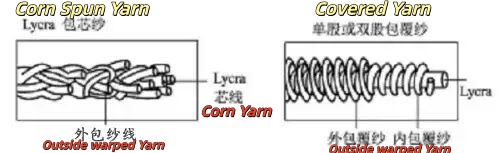
What is the difference between Core spun yarn and Covered yarn?

The core yarn and outer packaging materials are different


Taking spandex core spun yarn and spandex covered yarn as examples

1. Core spun yarn generally uses synthetic fiber filaments with good strength and elasticity as the core yarn, and is wrapped with short fibers such as cotton, wool, and viscose fibers. For example, spandex core spun yarn is a type of spandex wrapped in short fibers, with spandex yarn as the core and non elastic short fibers as the outer layer. When stretched, the core yarn is generally not exposed.


2. Covered yarn is a yarn core made of long or short fibers, wrapped with another type of long or short fiber yarn strip. The outer yarn wraps the core yarn in a spiral manner. For example, spandex covered yarn is an elastic yarn formed by wrapping spandex with long synthetic fibers, using spandex fibers as the core and non elastic short fibers or long fibers to wrap the elongated spandex fibers in a spiral shape. Under tension, there is a phenomenon of exposed core.


The equipment used for production is different


1. Core spun yarn is produced on a fine spinning machine.


2. Short fiber covered yarn is made on a splicing and double twisting machine, while long fiber covered yarn is made on a long fiber double twisting machine.


Process difference


1. Core spun yarn is usually spun using a fine spinning machine. When stretching the coarse yarn, the textile raw materials that need to be wrapped inside are added. Like cotton wrapped spandex; Polyester/viscose wrapped spandex; Cotton wrapped polyester filament; Polyester wrapped with polyester filament, etc.


2. Covered yarn is actually using a twisting machine, with one core yarn and the other wrapped around the outside. Using spandex as the core yarn and wrapping it with polyester, nylon, etc


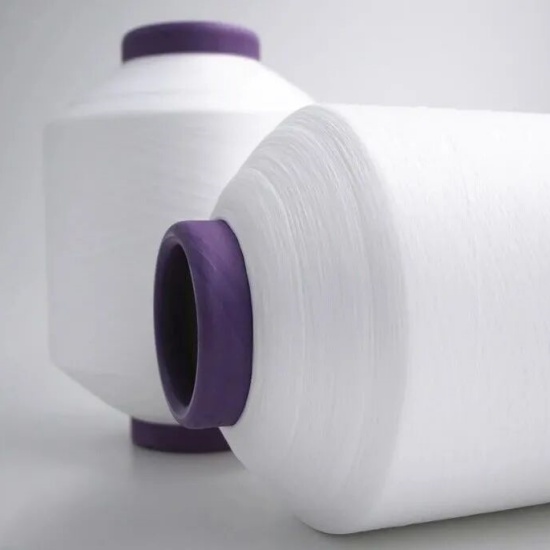
Short fiber covered yarn

How Trump's Tariff Policies Impact the Apparel Industry – And Why We Remain Competitive

As US President Donald Trump continues to advocate for higher tariffs on Chinese imports, many in the apparel industry are watching closely. The proposed increase in tariffs, particularly on goods manufactured overseas, could potentially drive up costs for U.S. retailers and consumers alike. For many businesses, this creates a pressing challenge: how to maintain quality and affordability while absorbing increased import duties.


However, not all companies are equally affected.


We are a stock clothing company specializing in high-quality apparel at exceptionally affordable prices. Our business model is based on sourcing excess inventory and overstock clothing, which allows us to keep our prices significantly lower than traditional retailers. Because our per-unit costs are already very low, the impact of additional tariffs is minimal compared to companies dealing with newly manufactured, high-cost goods.


Our main product lines include yoga wear, swimwear, and various women’s skirts and pants. Because we focus on overstock goods, we are able to offer most of our items at prices ranging from $1 to $2 per piece—or even lower.


Moreover, our ability to offer consistent quality despite lower prices gives us a competitive edge. Even in a higher-tariff environment, we can continue to provide great value to our customers without compromising on the standard of our products.


While tariff increases may reshape parts of the global supply chain, we remain confident in our model. For buyers and retailers seeking reliable, cost-effective apparel solutions, we are a stable and strategic choice—even in times of uncertainty.


overstock china


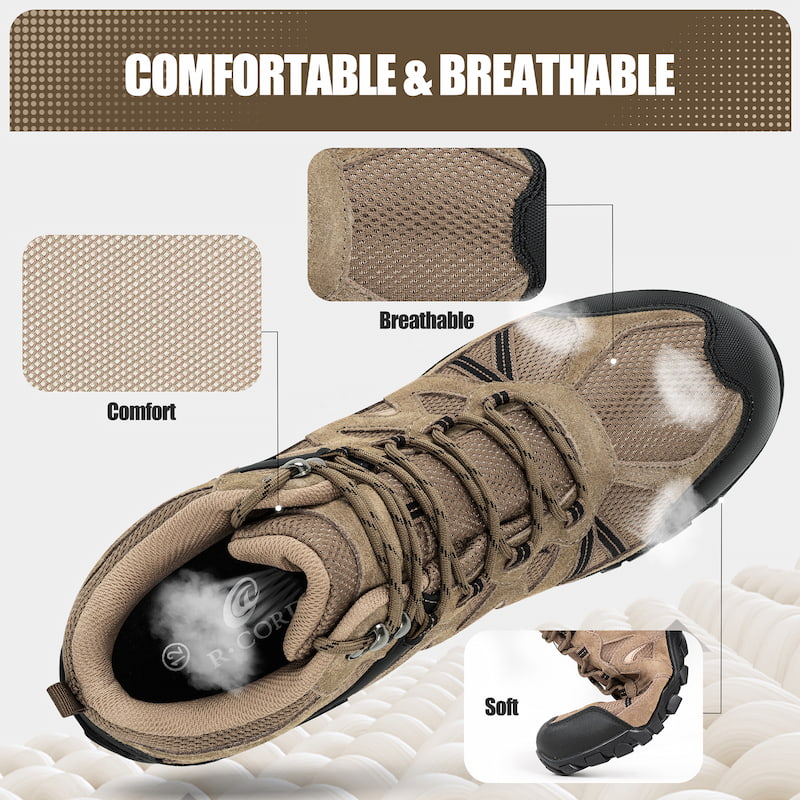
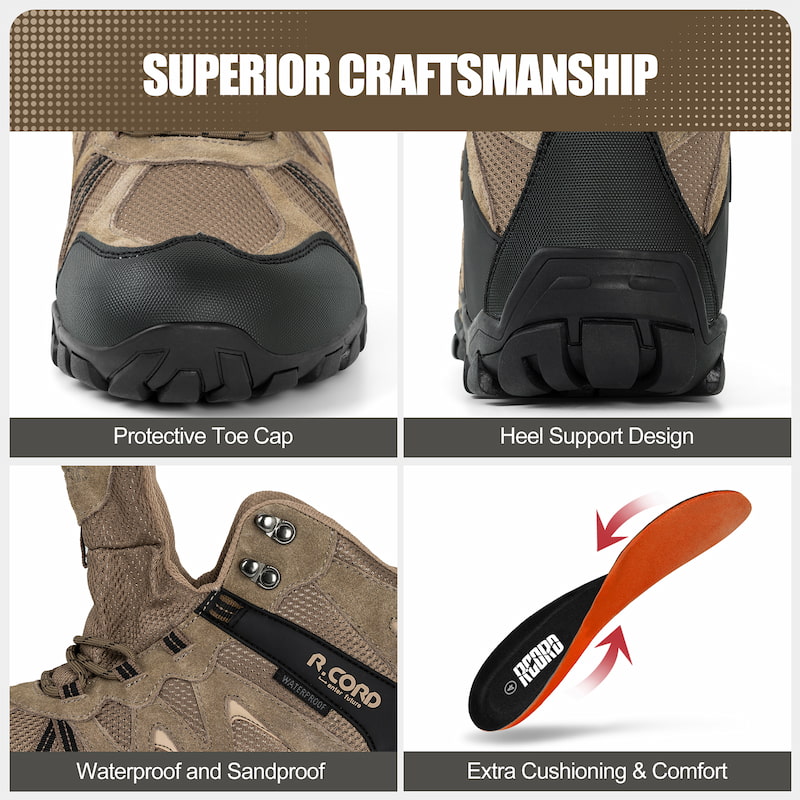
How do you know which hiking boots are right for you?

Choosing the right hiking boots involves considering several factors to ensure a proper fit and functionality. Here are some steps to help you determine which hiking boots are right for you:


1. Determine Your Hiking Needs: Consider the type of hiking you'll be doing. Are you planning short day hikes, multi-day backpacking trips, or rugged mountain treks? Different types of hikes require different levels of support, stability, and durability. Knowing your hiking needs will guide you in selecting the appropriate boot type.


2. Fit and Comfort: Proper fit is crucial for hiking boots. Ensure that the boots provide enough space for your toes to wiggle without feeling cramped, and that they have secure heel and ankle support. Visit a specialty outdoor store and try on different boot models, preferably in the afternoon when your feet are likely to be slightly swollen. Take the time to walk around and test the boots for comfort, stability, and any potential pressure points.


3. Boot Height: Hiking boots are available in different heights, including low-cut, mid-cut, and high-cut options. Low-cut boots are lighter and more flexible, suitable for well-maintained trails and day hikes. Mid-cut boots offer more ankle support and are suitable for moderate terrain. High-cut boots provide the best ankle and foot support for challenging and rugged terrain. Choose a boot height that matches the level of ankle support you need based on your intended hiking activities.


4. Consider the Terrain: Think about the type of terrain you'll encounter while hiking. If you expect to encounter rocky or uneven surfaces, a boot with a sturdy sole and good traction is important. If you plan to hike in wet or muddy areas, consider boots with waterproof or water-resistant features. Match the boot's features to the environmental conditions you are likely to face.


5. Weight and Durability: Consider the weight of the boots. Lightweight boots are generally more comfortable for shorter hikes, while heavier boots provide more durability and support for longer treks and backpacking trips. Strike a balance between weight, durability, and your personal comfort preferences.


6. Break-in Period: Keep in mind that hiking boots often require a break-in period to mold to your feet and become more comfortable. It's a good idea to give yourself enough time before your hiking trip to wear them on shorter walks or hikes to allow the boots to adjust to your feet.


7. Read Reviews and Seek Recommendations: Take the time to read customer reviews and seek recommendations from experienced hikers or outdoor enthusiasts. Their insights can provide valuable information about the performance, durability, and fit of different hiking boot models.


Remember, everyone's feet are unique, and what works for one person may not work for another. Ultimately, selecting the right hiking boots involves finding the right balance between comfort, functionality, and your specific hiking needs.