What Is False Twisted Elastic Yarn?

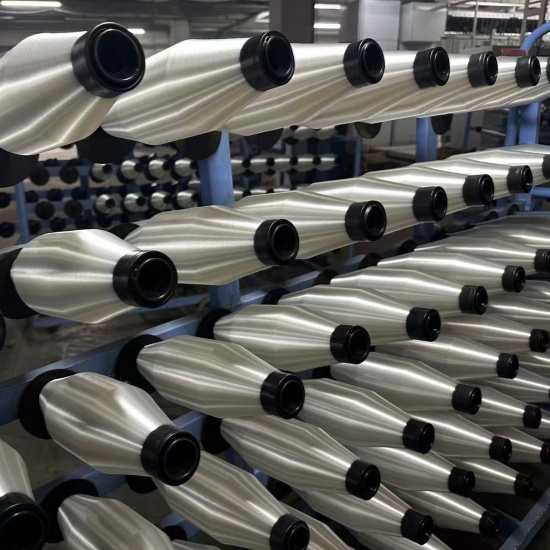
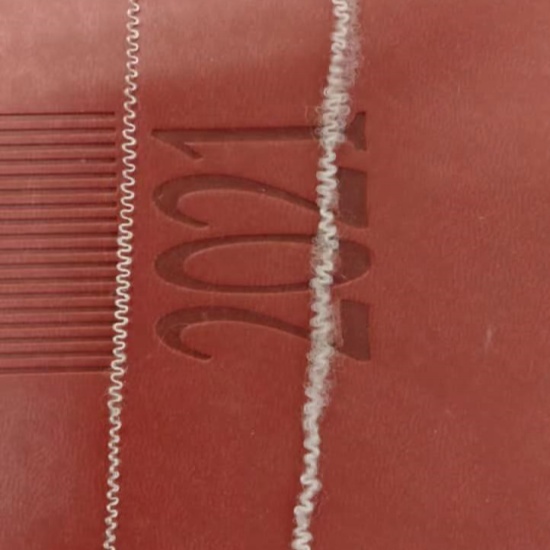
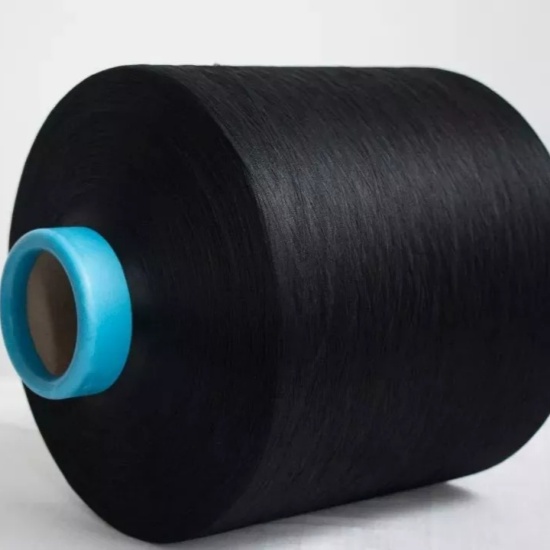
False twisted elastic yarn is a type of elastic yarn that utilizes the thermoplastic properties of synthetic fibers such as polyester and nylon. It is heated and shaped during fiber twisting and curling deformation to fix the twisted and curled state, resulting in a fluffy, elastic, and untwisted elastic yarn. Due to the slight torque and good elasticity of the yarn, it is called false twisted elastic yarn.


General false twisted yarn

The fiber is twisted to a certain shape and then untwisted, and the yarn maintains the looseness of the twisted state, but without twist. The traditional processing method adopts the three-step method mentioned above, while currently it is completed in one step on a false twist elastic yarn machine. Its fibers have good torsion and elasticity, so it is possible to develop crepe fabrics and elastic fabrics with good crepe effect.

False twisted elastic yarn


True twisted false twisted yarn

In order to achieve a comfortable effect and ideal bundling of the product due to the fluffiness of the false twisted elastic yarn, and to achieve good weaving effect on the fabric, people add a certain degree of twist on the false twisted elastic yarn machine to form solid twisted false twisted elastic yarn. At present, the real twist and false twist elastic yarn can be completed on the false twist one-step method of adding elasticity machine.

Slub yarn

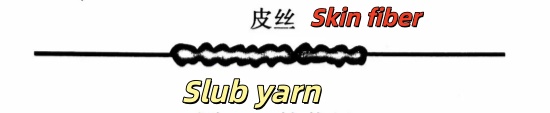
Mixing false twisted elastic fibers with other single fibers and twisting them together, due to the gap overfeeding, the surface of the mixed fibers has regular bamboo segments, which are completely covered by the skin fibers, rather than the skin fibers and core fibers being twisted side by side. This is the bamboo segment yarn(Slub yarn) developed in the market.


The length range of bamboo nodes in bamboo fibers is 1-15cm, and the number of bamboo nodes per meter can be adjusted within 3-10. The tightness of bamboo nodes can be adjusted due to tight clamping without slipping, or due to loose clamping, slipping can occur.

Uneven false twisted yarn

Made from MOY (medium speed spinning) polyester or POY (pre oriented yarn, high-speed spinning) polyester as raw materials, through stretching and false twisting on a one-step machine. In the stretching section, the coarse and fine sections of the yarn are produced due to different stretching, and the deformation of the yarn in the false twisting section achieves both coarse and fine appearance and fluffy performance. The produced elastic yarn with coarse and fine sections is called uneven false twisting yarn.


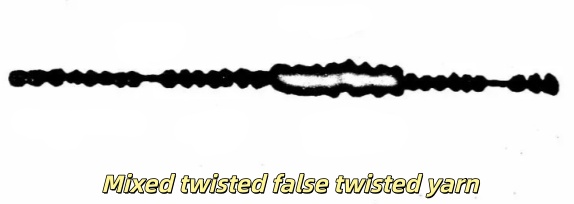
Mixed twisted false twisted yarn

In the processing of yarn, two types of twists, positive and negative, are formed in the twisting and untwisting zones. Therefore, overall, the positive and negative twists cancel each other out and become "untwisted", while there are positive and negative twists in some parts of the yarn, resulting in mixed twisted false twisted deformation yarn, which has two types: single strand type and mixed fiber type.


Single stranded type refers to single filament mixed twisted false twisted yarn. In the twisted section of the yarn, the fiber is tightly wrapped and presents finer twisted nodes, while in the untwisted section, the yarn body is fluffy and presents thicker nodes. The length of the twisted nodes and thicker nodes can be adjusted. Mixed fiber type refers to the combination of two types of single filament mixed twisted false twisted yarn to form a dual color effect, heteroshrinkage effect, and three combinations of irregular polyester yarn, cationic polyester yarn, and colored yarn with two types of fibers.
Why Are Spandex Fabrics Prone To Yellowing?

Spandex is a commonly used fiber variety in our daily lives, with the most prominent feature being good elasticity, low fineness, high elastic modulus (up to 400% -800% elongation at break), and low specific gravity.


Spandex can be blended with textile fibers such as wool, cotton, polyester, acrylic, and viscose to create fabrics that are soft, elastic, and comfortable to wear. They are widely used in fitness wear, swimwear, jeans, leggings, underwear, jumpsuits, and underwear. Due to the high demand for a snug fit in women's clothing, spandex fabric is more favored by women.


For example, in lace fabrics (including spandex) that women love the most, wearing or placing them for a long time can easily cause yellowing. What is the reason for this?

Due to the presence of a large number of reactive groups such as amino groups on the molecular chain of spandex, it is prone to yellowing during high-temperature setting or storage, which affects the quality of finished products, especially fluorescent whitening fabrics and light colored fabrics.


Due to the use of silicone oil lubricants and other additives in the weaving process of spandex to improve its spinning performance. These additives will naturally degrade over time, causing the fibers to turn yellow. In addition, spandex itself is not easy to color, which means that conventional dyes cannot color spandex. Therefore, in the case of insufficient restoration and cleaning after fabric dyeing, the so-called yellowing phenomenon may also occur.


Best selling black spandex filament - original coloring technology.


Black spandex is a widely used variety in clothing fabrics. The black spandex filament spun directly through special processes such as original liquid coloring or online addition not only has a more uniform and durable black effect, higher color fastness, and excellent washing resistance, but also eliminates the fiber dyeing process, reduces energy consumption during the dyeing process, and minimizes environmental pollution.

Can A Piece Of Paper Be Turned Into A Piece Of Clothing?

Can a piece of paper be turned into a piece of clothing? The mystery lies in the yarn used to weave clothes——paper yarn.


Paper yarn is a new type of textile material that has the advantages of environmental protection, natural biodegradability, moisture absorption and breathability, and has therefore received attention in the textile industry. Its main raw materials are various types of paper, including but not limited to waste paper, wood pulp paper, etc. Through specific processing techniques, paper is fiberized to become slender fibers, and then processed through processes such as combing, merging, and twisting to create a yarn like form.


There are currently two main types of paper yarn: 1.Pure paper yarn: paper yarn made by directly twisting cut paper strips into 100% paper composition. 2.Composite paper yarn: A paper yarn made by cutting and twisting paper into a single piece, with paper strips as decorative yarns, core yarns as main yarns, and fixed yarns twisted and wrapped around decorative yarns to form a stable effect on the core yarns.

Characteristics of paper yarn

1. Environmental Friendliness
The main raw material for the production of paper yarn comes from paper, which can be recycled and reprocessed using waste paper, reducing dependence on traditional textile materials and lowering environmental pressure.


During the production process, compared to traditional textile techniques, paper yarn has relatively lower energy consumption and pollution.


2. Unique Appearance

Paper yarn has a unique texture and appearance. Its surface is usually rough, with natural textures that give people a rustic feeling.


In terms of color, a wide range of color options can be obtained by dyeing paper or using colored paper as raw material.


3. Good Breathability

Due to the loose fiber structure of paper yarn, it has good breathability, allowing air to circulate freely and making it more comfortable for people to wear.


4. Easy To Degrade

Paper yarn is relatively easy to degrade in natural environments and does not cause long-term pollution to the environment like some synthetic fibers.


Application Domain

1. Clothing field
It can be used to make summer clothing, casual wear, etc. Its breathability is suitable for hot weather. Some designers also utilize the unique texture and appearance of paper yarn to create creative and fashionable clothing.Accessories such as hats, scarves, bags, etc., add a unique style to fashionable items.


2. Packaging field
Paper yarn can be made into packaging materials, such as handbags, gift box packaging, etc. Its environmental characteristics meet the demand of modern consumers for green packaging.


3. Home Decoration Fields
Paper yarn can be used to make household items such as curtains and carpets. The natural texture and color of paper yarn can bring a warm and natural atmosphere to the home environment.

Cationic Mono 20D Filament Yarn

Polyester Cationic Mono 20D

is a specialized, fine, and highly elastic yarn that offers a shiny and vibrant finish.


Cationic Mono yarn refers to the production of cationic DTY by adding a certain component to the chips and spinning it in a spinning factory. Cations can improve the dyeing performance of polyester.


Its monofilament structure and textured nature make it versatile for a range of fashion, home textile, and industrial applications. Whether used in evening wear, upholstery, or specialty fabrics, this yarn provides a combination of strength, stretch, and aesthetic appeal.

Polyester Cationic Mono 20D

The cationic dyeing process ensures rich, long-lasting colors, making it an ideal choice for high-quality textile products where both performance and visual appeal are important.Make polyester fabric brighter and more vibrant in color, not only can ordinary synthetic fuels be dyed, but also cationic fuels can be dyed.


 Cationic Mono Yarn

Collagen Fiber Fabric The Ultimate Skincare Textile for Antibacterial Underwear & More (2025 Guide)

Have you ever slathered on collagen serum before bed, only to wonder why we neglect the rest of our skin? Our faces get all the anti-aging love, but our bodies spend 16+ hours a day wrapped in fabrics that rarely contribute to skin health—until now. Collagen fiber fabric is changing the game, turning everyday underwear and loungewear into "wearable skincare." As someone who’s tested dozens of functional textiles, I’m breaking down why this material is taking the wellness fashion world by storm, plus how to spot the real deal.


What ActuallyIs Collagen Fiber Fabric?

Let’s start with the basics: This isn’t just fabric dipped in collagen serum (those wear off after one wash). Collagen fiber fabric is apermanently infused functional textilemade by extracting collagen from sustainable sources—usually fish scales, a byproduct of the fishing industry —and integrating it directly into the fiber during manufacturing.

There are two main types you’ll see on labels:


Viscose-based collagen fiber: Collagen is turned into a slurry and blended with viscose spinning solution, creating a soft, breathable fiber with wool-like texture .
Nylon-based collagen fiber: Collagen peptides are mixed into nylon polymers, resulting in stretchier, more durable fabric perfect for activewear and underwear .

The best part? The collagen is locked into the fiber structure, so it doesn’t wash away—even after 30+ cycles .


5 Reasons Collagen Fiber Is the  Skincare Textile

If you’re tired of scratchy synthetics or cotton that dries out your skin, here’s why collagen fabric deserves a spot in your dresser:


1. It’s a "Wearable Moisturizer" for Your Whole Body

Our skin loses moisture through friction with regular fabrics, but collagen fiber acts like a hydrating barrier. Umorfil®—a leading collagen fabric brand—found their material retains 30% more skin moisture than 100% cotton . How? The collagen peptides in the fiber attract and lock in humidity, so even dry elbows or sensitive thighs stay soft all day. I’ve noticed a huge difference in my winter skin—no more post-shower tightness after wearing collagen underwear!


2. Antibacterial & Odor-Resistant (Game-Changer for Underwear)

Most collagen fabrics are blended with antibacterial agents (like silver ions) during production . This double duty means they fight the bacteria that cause body odorandkeep skin irritation at bay. OEKO-TEX 100-certified collagen underwear fabrics even hold up to 20-30 washes before needing replacement —way longer than regular antimicrobial textiles.


3. Gentle Enough for Sensitive (or Aging) Skin

Collagen fiber is naturally hypoallergenic because it’s made from amino acids that mirror our skin’s own structure .  use nanotechnology to eliminate harsh chemical softeners, making their collagen (mask clothing) safe for babies, eczema-prone skin, and mature skin that’s lost elasticity . NC State University research even confirmed collagen fibers boost cell proliferation, which helps repair delicate skin .


4. Breathable & Temperature-Regulating

Unlike synthetic fabrics that trap sweat, collagen fiber has a high moisture-wicking rate—thanks to its porous structure .  collagen fabric has a Q-max value of 0.111 (near the ideal for skin comfort), meaning it feels cool to the touch in summer and prevents overheating during workouts . I wore a collagen tank top hiking last month, and I was shocked at how little I sweat compared to my polyester tees.


5. Sustainable & Eco-Friendly

Here’s the cherry on top: Most collagen used in textiles comes from fish scales that would otherwise end up in landfills . This circular approach reduces fashion’s carbon footprint, and the fibers themselves are biodegradable—unlike polyester, which takes 200+ years to break down. Brands like Hermin Textile even blend collagen with recycled nylon for extra sustainability points .


How to Shop for Quality Collagen Fiber Products (Avoid Fakes!)


Not all "collagen fabric" is created equal. Here’s what I look for when testing products:

Check the Fiber Type & Specs

  • Nylon-based (for stretch): Look for 40D/36F or 80D/72F DTY  if you want antibacterial underwear—these are the most common for intimate apparel .
  • Viscose-based (for softness): 32S or 40S yarn counts work best for loungewear,while 60S is luxuriously lightweight for summer dresses.

Verify Third-Party Testing

Reputable brands will share lab results forprotein/amino acid content(the higher, the better) and antibacterial efficacy . Avoid products that only claim "collagen-infused" without proof—these are often just surface-treated.


Look for Certifications

OEKO-TEX Standard 100 is non-negotiable—it means the fabric is free of harmful chemicals . Some brands also have biodegradability certifications, which is a plus for eco-conscious shoppers.


My Favorite Collagen Fiber Finds (2025 Picks)

Everyday Underwear: 56% nylon/44% spandex collagen fabric is buttery soft and stays fresh all day .
Loungewear:  mask clothes line uses fish scale - derived collagen and feels like "

Cotton-Like Polyester Elastic Yarn For Knitting Or Weaving Dull Raw White

Cotton-like yarn

is a new product designed to mimic cotton. It feels soft and fluffy, looks like cotton fabric, and hangs nicely. This yarn blends the advantage of both cotton and polyester, offering the comfort and natural feel of cotton without its downsides.


Compared with cotton fabrics,elastic cotton-like fabrics have better stretchability and adaptability,so they are more suitable for making sportswear, tights and underwear.


It’s easier to work with, produces less waste in dyeing, can be used on a wide variety of machines, pollutes less, and dries faster than pure cotton. Plus, it combines the moisture-wicking properties of cotton with the strength, colorfastness, and wrinkle resistance of polyester.


Advantages

1.Non-ammonia elasticity, no-ironing.

2.Natural cotton feel, good skin-friendliness and drape.

3.Moisture absorption and quick drying.

4.Recydling and environmental protection, energy saving and emission reduction.

5.Better scalability and adaptability.

6.Common disperse dyes can be boiled and dyed under normal pressurewithout carrier. Bright color and excellent color fastness.

Cuprammonium Rayon Yarn The Innovative Upgrade of High-End Cupro Fiber for Global Textile Brands

Cuprammonium RayonYarn: The Innovative Upgrade of High-End Cupro Fiber for Global Textile Brands
In the global textile market, where consumers pursue both luxury texture and practical performance, and brands seek cost-effective high-quality materials, cupro composite yarn has emerged as a game-changer. Derived from the upgrade of premium cupro fiber (Bemberg), this innovative material combines the advantages of natural-like comfort and synthetic fiber durability, making it a top choice for fashion, sportswear, and home textile buyers worldwide.

What Is Cupro Fiber (Bemberg): The Foundation of Luxury

Before delving into cupro composite yarn, it’s essential to understand its core component—cupro fiber (Bemberg). Developed by Japan’s Asahi Kasei, this high-end rayon fiber is renowned for its silk-like elegance and superior wearing experience, making it a staple in luxury textiles.

Key Traits of Cupro Fiber

  • Silk-like Texture: It boasts a soft, smooth handfeel and gentle luster, mimicking the luxury of real silk without the high maintenance cost of natural silk.
  • Excellent Wearability: With outstanding drape, it hangs beautifully on garments, ensuring a sleek, refined look for dresses, blouses, and suits.
  • Breathable & Moisture-Wicking: Known as a "breathable fiber," it efficiently absorbs and releases moisture, keeping the skin dry and comfortable—ideal for close-fitting clothing.
  • Anti-Static: It minimizes static cling, a common annoyance with synthetic fibers, enhancing the wearing comfort for end-users.

Traditional Applications of Cupro Fiber

Thanks to its premium properties, cupro fiber is widely used in high-end textile products, such as:
  • Intimate apparel (knitted and woven underwear)
  • Women’s hosiery
  • Silk-like blouses, trench coats, trousers, and outerwear
  • Lining for luxury suits (to elevate comfort and texture)
However, pure cupro fiber has limitations: it is relatively expensive, has lower strength, and is prone to wrinkling—issues that cupro composite yarn solves perfectly.

Cupro Composite Yarn: The "Best of Both Worlds" Innovation

Cupro composite yarn is created by combining cupro fiber with synthetic fibers (primarily polyester or nylon). This "blending" strategy not only retains the luxury traits of cupro but also addresses its shortcomings, while reducing overall costs—making high-end cupro performance accessible to more global brands.

Core Advantages of Cupro Composite Yarn

  1. Retains Cupro’s Luxury Comfort: It inherits cupro’s soft handfeel, silk-like luster, and moisture-wicking ability, ensuring the same level of comfort as pure cupro.
  2. Enhanced Durability & Wrinkle Resistance: The addition of polyester or nylon significantly improves the yarn’s strength and anti-wrinkle performance. Garments made from it are less likely to deform or wrinkle, reducing maintenance efforts for users.
  3. Quick-Drying for Versatility: Synthetic fibers (especially functional polyester/nylon) boost the yarn’s quick-drying property, expanding its use to sportswear and activewear—perfect for brands targeting the fast-growing athleisure market.
  4. Cost-Effective: By replacing part of the expensive cupro with affordable polyester/nylon, the material cost is reduced without compromising quality, helping brands balance luxury positioning and pricing competitiveness.
  5. Flexible Dyeing Options: It supports two dyeing methods to meet diverse design needs:
    • Single Dyeing: Creates a two-tone effect (due to different dye absorption of cupro and synthetic fibers), adding unique visual appeal to garments.
    • Over-Dyeing: Produces solid colors, suitable for minimalist or classic style products.

Wide Applications: From Fashion to Sportswear & Home Textiles

With its balanced performance, cupro composite yarn caters to multiple textile categories, making it a versatile material for global buyers:
Application Field Reason for Suitability Target Products
Intimate Apparel Moisture-wicking, soft, and breathable Underwear, loungewear, bras
Sportswear & Activewear Quick-drying, durable, and anti-static Sports tees, leggings, running jackets
Fashion Garments Silk-like luster, good drape, and wrinkle resistance Blouses, dresses, trench coats, tailored trousers
Home Textiles Comfortable, breathable, and skin-friendly Bedding sets, pillowcases, throws

Standard Specifications & Customization Options

To meet the diverse needs of global brands (from small-batch designers to large-scale manufacturers), we offer both standard and custom cupro composite yarn specifications.

Standard Specifications

Type of Composite Yarn Common Specifications
Cupro/Nylon Composite Yarn 30D Cupro + 30D Nylon
30D Cupro + 40D Nylon
50D Cupro + 30D Nylon
Cupro/Polyester Composite Yarn 30D Cupro + 30D Polyester
30D Cupro + 50D Polyester
30D Cupro + 75D Polyester
50D Cupro + 30D Polyester

Customization Service

We understand that different brands have unique design and functional requirements. Thus, we providecustom composite solutions, such as cupro + SORONA (bio-based polyester for eco-friendly lines) or other fiber blends. Just share your needs (e.g., fiber ratio, fineness, functional additives), and our team will develop a tailored product for you.

Why Choose Cupro Composite Yarn for Your Brand?

In a market where consumers demand "luxury that works" and brands focus on cost-efficiency and product differentiation, cupro composite yarn offers three key values for global buyers:
  • Market Differentiation: Its silk-like texture and versatile performance help your products stand out from those made with ordinary synthetic fibers.
  • Cost Optimization: It reduces raw material costs while maintaining premium quality, improving your profit margins.
  • Wide Adaptability: From high-end fashion to casual sportswear, it fits multiple product lines, minimizing the need to source multiple materials.
If you’re a textile buyer, fashion brand owner, or home textile manufacturer looking for high-quality, cost-effective materials to upgrade your product line, cupro composite yarn is your ideal choice.
We offer free samples for testing and professional technical support to help you integrate this material into your designs. Whether you need standard specifications or custom solutions, our team is ready to collaborate with you.

Do You Know What Kind Of Yarn KDK Is?

In the world of textile fabrics, every type of yarn has its own exclusive mission. Some pursue softness and skin friendliness, while others focus on toughness and durability. KDK yarn, with its unique craftsmanship and diverse advantages, has become an "all-around player" that spans industrial applications and daily scenarios, quietly permeating every aspect of our lives.


Not Just Yarn, But Also The Combination Of Craftsmanship And Quality


KDK yarn

is a functional yarn made using advanced twisting technology, originating from high-quality production technology in Taiwan,China. It is made from high-quality nylon as the core raw material and processed through multiple processes such as fine elastic false twisting and fiber splitting.


Different from the rough texture of ordinary yarn, Kelin yarn focuses on the core characteristics of "high toughness, no joints, and easy processing". Each roll of KDK yarn can reach a standard of over 5kg without joints, improving the quality and texture of the finished fabric from the source.


Unlike Organza mono yarn, which has a stiff and tough texture, Kelin yarn balances softness and stiffness, avoiding the roughness and discomfort of synthetic yarn and compensating for the shortcomings of ordinary yarn strength. Through fine control, each yarn maintains uniform thickness and toughness, breaking the traditional dilemma of uneven dyeing and easy breakage of yarn.


The core advantages of KDK yarn


Being able to stand out among numerous yarns, the advantages of KDK yarn are hidden in every detail. Using high-quality nylon raw materials and advanced twisting technology, the strength of KDK yarn far exceeds that of ordinary yarn. Whether used for industrial weaving or daily fabrics, it can effectively reduce the problem of breakage in the production process, improve production efficiency, and make the finished fabric more durable and less prone to deformation.


Complete specifications, suitable for multiple scenarios: KDK yarn has multiple specifications such as 200D, 280D, 390D, 800D, etc., which can be flexibly selected according to different needs.


It can be used in industrial scenarios such as adhesive tape, jacquard webbing, industrial fabrics, etc., and can also be matched with other fabrics for daily use in clothing, accessories, curtains and other fields, with full practicality.


For terminal brands, the diverse adaptability of Kelin yarn can provide more possibilities for design. Whether it is industrial accessories or terminal clothing, it can enhance the added value of brand products with its texture and durability; For ordinary consumers, products made of KDK yarn mean more durability, comfort, and texture, bidding farewell to the troubles of clothing deformation and ribbon detachment, allowing every fabric to accompany them for a long time.

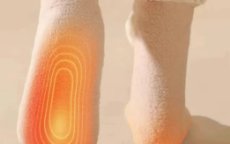
How Light Absorbing Heating Yarn Brings Warmth and Innovation to Modern Fabrics

How Light Absorbing Heating Yarn Brings Warmth and Innovation to Modern Fabrics

Light Absorbing Heating Yarn


1.Principle

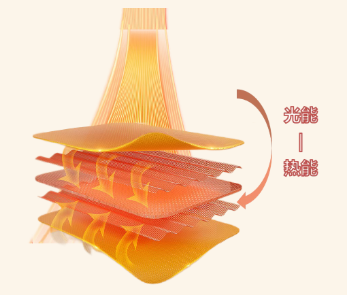
Absorbing light-heat yarn, also known as photothermal fiber, is a type of fiber that can convert all the light waves in the solar spectrum (including visible light and invisible light) as well as the infrared rays emitted by the human body into thermal energy. The principle is to absorb light energy through special chemical substances or structures and convert it into thermal energy, thereby achieving the effect of absorbing light and generating heat. This enables the fabric and fillings made from this type of yarn to have the function of warming up and keeping warm.

2. Performance Characteristics.
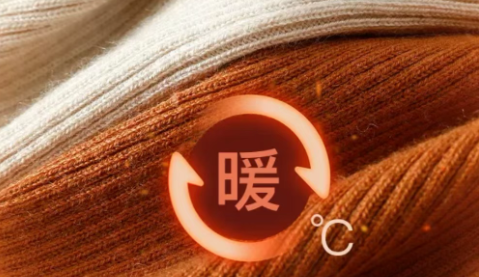
(1) Efficient Light Absorption and Heating: In cold environments, the light-absorbing and heating yarn has an exceptionally remarkable warming and insulation effect. Whether during outdoor activities or in cold environments in daily life, this fiber can quickly take effect, providing warmth for people. Its heating effect is rapid and long-lasting, capable of providing a significant temperature difference in a short period of time, allowing wearers to feel warmth and comfort.
(2) Excellent Insulation Performance: With outstanding insulation performance, even in environments with insufficient light or low temperatures, this fiber material can effectively retain body heat, reduce heat loss, and provide a lasting sense of warmth. It is an energy-saving and environmentally friendly choice, capable of maintaining comfort in extreme weather conditions, providing an ideal warm solution for outdoor activities and daily wear.

(3) Comfort and Breathability: The photothermal fiber combines insulation with breathability, ensuring that wearers can enjoy warmth while also experiencing a light and comfortable feeling. The special structure of this fiber allows for air circulation, effectively eliminating moisture and maintaining dryness on the body surface, thereby enhancing the comfort of wearing.


3. Applications
(1) Daily clothing: Enhance the comfort and practicality of daily wear
(2) Outdoor sports equipment: Provide warmth and protection, enhancing the experience of outdoor activities

(3) Household items: A perfect combination of environmental friendliness and comfort

Current specification: 75D

How To Perform "Post Waxing" On The Machine To Improve Weaving Performance?

There is a rear waxing device installed on the silk machine, which consists of waxing rollers, wax tanks, changing gears, and corresponding heaters. The position of the rear waxing device is behind the oven. It is a process of applying a layer of wax to the dried silk strip after sizing, which is then in contact with the waxing roller in the waxing tank and coated with another layer of wax. Therefore, it is called post waxing.

The purpose and function of waxing afterwards: In order to protect the warp film, further improve the lubrication effect and smoothness of the sizing warp, prevent the warp from fuzzing, increase the wear resistance of the warp, reduce the friction resistance between the silk processing and the machine parts, and improve the weaving performance and efficiency.


So how to wax it? The waxing method is achieved by the contact between the waxing roller and the surface of the warp yarn. When the electric motor drives the waxing roller to rotate, the molten wax adheres to the surface of the waxing roller, allowing the warp yarn passing through the waxing roller surface to be evenly, stably, and continuously waxed.


The amount of wax applied can be adjusted and controlled by the following methods: (1) changing the speed of the wax roller to adjust the amount of wax applied. Fast rotation speed results in more wax application, while the opposite results in less wax application. (2) Changing the contact angle between the warp blade and the waxing roller controls the amount of wax applied. Increasing the contact angle between the filament and the waxing roller increases the amount of wax applied, while decreasing the amount of wax applied.

In general, it is recommended to apply wax after use in summer and oil after use in winter. However, for polyester stretch processed yarns that require a slightly stiff warp, it is better to apply wax later. The temperature of the wax solution in the wax tank can be automatically controlled according to the set value. Some use the interlayer steam heating method, while others use the center electric heating wire of the waxing roller or the built-in electric heating rod in the wax tank for heating.